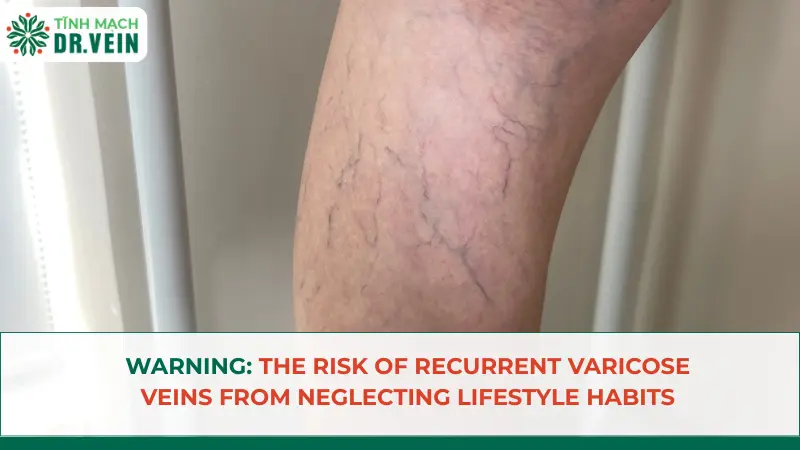
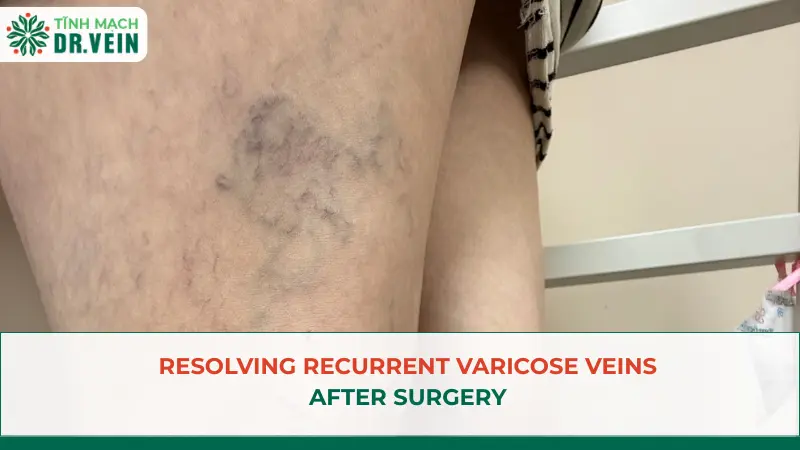
Many patients feel anxious and exhausted when symptoms such as heaviness, fatigue, and cramps persist or return, despite persistently following medical protocols for years. In reality, this condition often does not stem from a “treatment-resistant” body, but rather because the initial intervention method failed to target the root cause. When the underlying pathology remains hidden inside, the occurrence of varicose vein recurrence after treatment is merely a matter of time.
The story of Ms. T.T.K. (72 years old), with a health-seeking journey lasting over 20 years, is a typical clinical example demonstrating the consequences of applying an unsuitable method.
Initial Condition: 20 Years of Unresolved Treatment
Ms. K. came to Dr. Vein clinic with a medical history spanning over two decades. Throughout that long period, she mainly maintained taking oral medications and wearing medical compression stockings as prescribed. About 3 years ago, she tried intervening with superficial sclerotherapy in hopes of eliminating the dense clusters of green veins on her skin.
However, those efforts did not bring long-lasting results. Symptoms such as heaviness, fatigue, a burning sensation around the ankles, and nocturnal cramps did not subside. In fact, the intensity of the pain steadily increased, leaving her feeling deeply disappointed. The situation of varicose vein recurrence after treatment became even more complex as she simultaneously faced other underlying conditions such as a herniated disc and knee osteoarthritis.
Differential Diagnosis: Hunting Down the Missed “Culprit”
At Dr. Vein, Dr. Le Kim Cao (MSc, Specialist Level II) directly performed a vascular Doppler ultrasound to find the reason why the previous protocols failed. The ultrasound screen revealed a clear truth:
1. Application of the wrong method
The decision to only perform superficial sclerotherapy on the green veins 3 years ago was an incorrect approach. This method is only effective for tiny capillaries and does not affect the damaged large blood vessel trunks located deep within the muscle. This technique merely addressed the “tip” on the skin’s surface while overlooking the root of the disease.

2. The core cause was overlooked
The ultrasound detected pathological reflux flows at core locations that had not been properly intervened, including:
- Insufficiency of the great saphenous vein valves in both legs.
- Insufficiency of the popliteal vein valve in the left leg.
- Insufficiency of the perforating vein valves in the right calf.
The intervention 3 years ago only handled the external aesthetic manifestations. The crucial pathological sources in the main venous system and perforating branches remained intact. These very reflux flows continued to cause blood circulation stagnation, maintaining and worsening the aching symptoms.
Final Medical Diagnosis: Lower extremity venous insufficiency at the C1 level.
New Regimen: Eradicating the Remaining Lesions at Their Root
Understanding the cause behind this episode of varicose vein recurrence after treatment, Dr. Le Kim Cao formulated a new regimen, directly targeting the physical lesions hidden deep inside:
Prescribing UGFS (Ultrasound-Guided Foam Sclerotherapy) for both legs: This method was prioritized due to its high flexibility, allowing the doctor to intervene accurately at multiple interwoven damaged locations in a single session. This is an intervention technique that goes deep into the root, different from the simple superficial sclerotherapy that Ms. K. previously underwent.

The doctor also clearly explained that this roadmap will resolve the aching symptoms caused by the circulatory system. Issues related to the musculoskeletal system and spine will need to be concurrently addressed by their respective specialties to bring about overall health recovery.
Advice From the Doctor
Alongside the modern medical regimen, Ms. K. was carefully advised on the process of changing her lifestyle. This factor plays a supporting role in the body’s recovery, while repelling the risk of varicose vein recurrence after treatment in the future:
- Maintain the habit of regularly wearing medical-standard compression stockings to assist in pushing blood back to the heart.
- Limit postures such as standing still or sitting with bent knees for long periods, which increase pressure on the lower extremity circulatory system.
- Increase the performance of gentle physical therapy exercises to maintain joint and muscle flexibility.
- Monitor and control accompanying underlying conditions such as diabetes and dyslipidemia (high blood fat).
Adhere to the appointment schedule: Return for a follow-up visit on time after 1 month for the doctor to evaluate the response level to the UGFS intervention.
Ms. K.’s case is a profound medical lesson: The effectiveness of any intervention roadmap depends heavily on an accurate diagnosis and a suitable method. Applying the wrong technique not only fails to bring positive results but also delays the golden time, causing the underlying pathology to progress more severely. The journey to find a reputable specialized facility to perform a Doppler ultrasound screening is a vital key to resolving hidden pathogens!
Contact Information
- Address: No. 2, My Toan 2 Residential Area, Tan Phong, District 7, Ho Chi Minh City
- Hotline: 0932.19.28.82
- Website: drvein.vn/en
- Business Hours: Monday – Saturday, 8:00 AM – 5:00 PM