Lower limb varicose veins are a common condition, but they do not always present in a familiar pattern. Most cases stem from the weakness of main venous trunks such as the great saphenous vein or the small saphenous vein. However, about 15% of patients suffer from atypical forms of venous insufficiency, requiring doctors to diagnose accurately and choose a distinct treatment direction.
The story of Mrs. L.T.K.H. (62 years old) is a typical example of this special condition.
Initial Condition: Prominent Green Veins, Heaviness, and Fatigue in Both Legs
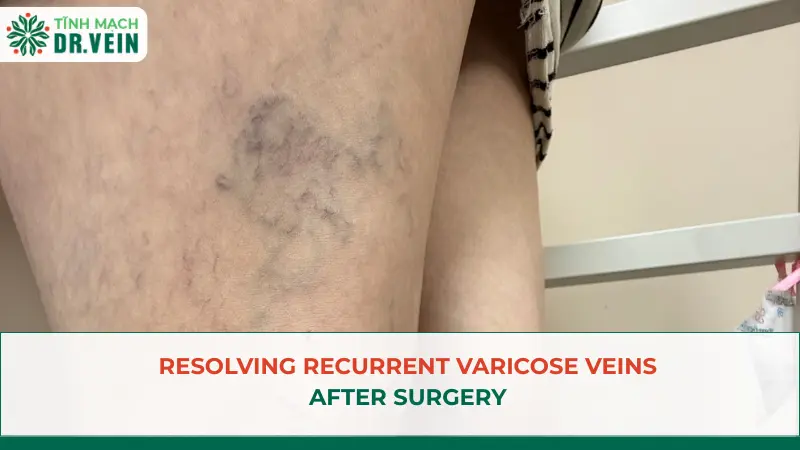
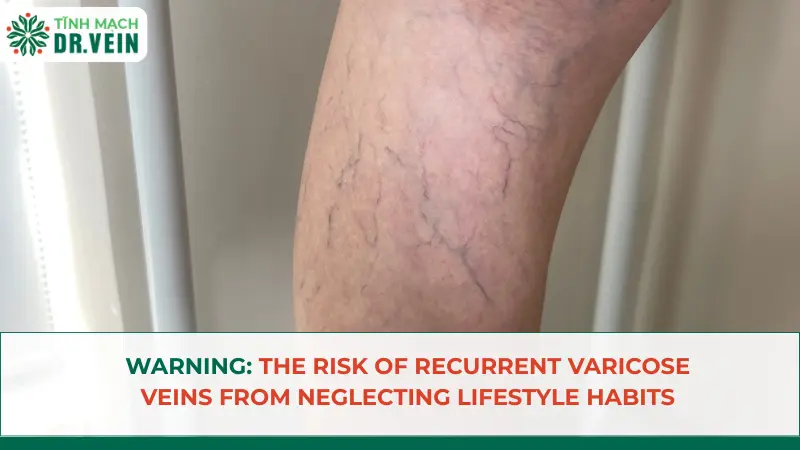
Over the past year, Mrs. H. noticed green veins becoming increasingly visible on both legs, especially on the back of the thighs and the popliteal fossa (back of the knee). The feeling of heaviness and fatigue appeared more frequently, especially when she had to stand or sit for long periods.
She shared: “It only started swelling this year. It swells when I sit for too long… Now it feels heavy, and walking long distances makes it very tired.”
Special Diagnosis: Detecting Giacomini Vein Insufficiency
After a clinical examination, Dr. Le Kim Cao (M.D., MSc, Specialist Level II) performed a Doppler ultrasound of the blood vessels in both legs. The results showed that the main venous trunks (great saphenous and small saphenous veins) were normal, but there was an abnormal connecting vein branch called the Giacomini vein—the primary cause of the symptoms.
The doctor explained: “Your form of venous insufficiency is a bit different from others. On the right leg, there is an abnormal branch connecting from the front to the back, and it is this branch that is insufficient.”

The Giacomini Vein is an anatomical variant not present in everyone. In Mrs. H.’s case, this vein branch was weakened, forming a reflux flow. This caused blood to flow backward to the rear of the leg instead of circulating correctly, increasing pressure and dilating the superficial veins. This is the reason why the network of green veins was clearly visible on the thigh and popliteal area.
Final Diagnosis: Giacomini Venous Insufficiency, Grade C1.
Personalized Treatment Protocol
For this special case of venous insufficiency, the doctor could not apply the standard laser ablation method but had to develop a separate protocol.
The treatment plan included:
- UGFS (Ultrasound-Guided Foam Sclerotherapy) for the right leg: Directly treating the insufficient Giacomini vein branch to induce sclerosis (scarring) and block the reflux blood flow.
- Superficial Vein Sclerotherapy: Treating additional diffuse dilated superficial vein branches to improve symptoms of heaviness and fatigue.
This method does not require surgery; the patient can walk and perform daily activities normally right after treatment, and effectiveness will become clearly visible after a few weeks.

Doctor’s Advice
To maintain treatment effectiveness and prevent disease progression, Mrs. H. was instructed by the doctor to:
- Wear medical compression stockings when standing or sitting for long periods.
- Engage in gentle exercises like walking or cycling to help blood circulate better.
- Avoid postures that put pressure on the legs, such as squatting or crossing legs.
- Follow up after 1 month to check results and evaluate the treated area.
Conclusion Mrs. L.T.K.H.’s case shows that not all cases of venous insufficiency are the same. Giacomini Vein Insufficiency is a rare form that is difficult to detect without specialized Doppler ultrasound. Thanks to accurate diagnosis and correctly directed treatment, Mrs. H. escaped the prolonged feeling of heaviness and significantly reduced the bulging green veins, helping her legs feel lighter every day.
Contact Information
- Address: No. 2, My Toan 2 Residential Area, Tan Phong, District 7, Ho Chi Minh City
- Hotline: 0932.19.28.82
- Website: drvein.vn/en
- Business Hours: Monday – Saturday, 8:00 AM – 5:00 PM