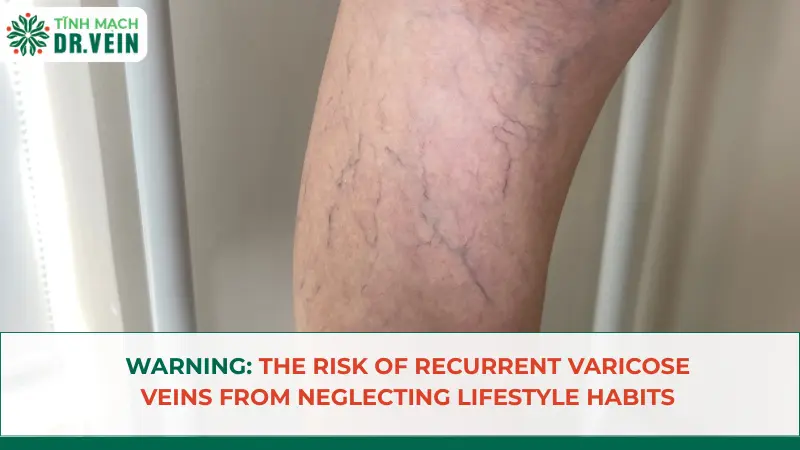
Lower extremity venous insufficiency is a persistent chronic condition. Many patients are subjective, mistakenly believing that undergoing surgery to remove the damaged blood vessels will completely cure this disease. However, the human circulatory system is incredibly complex, with thousands of interwoven blood vessels. Recurrent varicose veins can absolutely occur years after an intervention if patients do not maintain proper protective regimens.
Recently, Dr. Vein examined and treated patient D.T.A.T. (39 years old), who encountered this issue 4 years after vein stripping surgery. Let’s join Dr. Le Kim Cao (MSc, Specialist Level II) to analyze in detail the causes, symptoms, and in-depth treatment regimen for this clinical case.
Why Do Recurrent Varicose Veins Occur Even After Surgery?
Stripping surgery is a method involving skin incisions to extract the damaged segment of the great or small saphenous vein. This process helps eliminate the main reflux flow, effectively improving immediate symptoms.
However, the core cause of the disease is the weakness of the one-way venous valve system and an inelastic blood vessel wall structure. When the main vein branch is removed, blood is forced to find alternative pathways to flow back to the heart. Under the pressure of gravity and daily lifestyle habits, the valves in these collateral branches can continue to weaken, leading to dilation, blood pooling, and manifesting as recurrent varicose veins.

Furthermore, the formation of new capillaries to heal tissues often occurs at the old surgical site. These newly formed blood vessels lack controlling valves, making it easy for blood to flow backward. This is exactly why patients may see a dense network of spider veins appearing around the previously operated area. In short, surgery is not a permanent “talisman,” but rather requires patients to maintain a scientific lifestyle to protect their remaining blood vessels.
Clinical Analysis of Patient D.T.A.T. at Dr. Vein
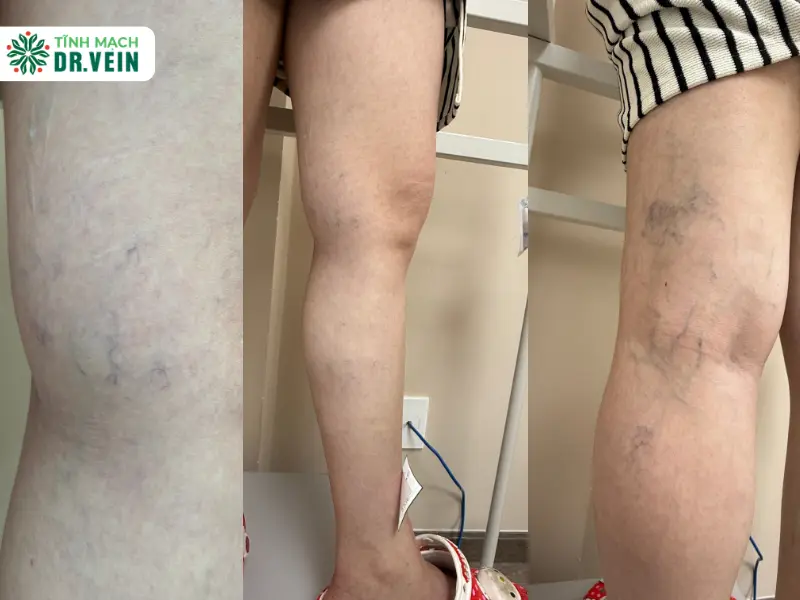
Ms. D.T.A.T, 39 years old, came to the Dr. Vein clinic feeling quite anxious. She shared that she had undergone stripping surgery on both legs about 3 to 4 years ago. Initially, her legs felt very light, and the aesthetics improved significantly. However, recently, scattered green veins began to appear again, heavily concentrated on the back of the thighs, popliteal fossa (back of the knees), and both calves. At the same time, she occasionally suffered from muscle cramps, a warning sign that the lower extremity circulatory system was experiencing problems once more.
Under the direct examination of Dr. Le Kim Cao, combined with a modern vascular Doppler ultrasound device, the patient’s venous structure was clearly analyzed:
- Great saphenous vein: Ultrasound results confirmed that the great saphenous veins in both legs had completely disappeared. This proves that the previous stripping surgery was successful in removing the main branches.
- Detecting new reflux: The ultrasound screen clearly displayed a reflux flow originating from the accessory saphenous vein, draining back into the great saphenous vein area in the right calf. Notably, the reflux time lasted for more than 2 seconds.
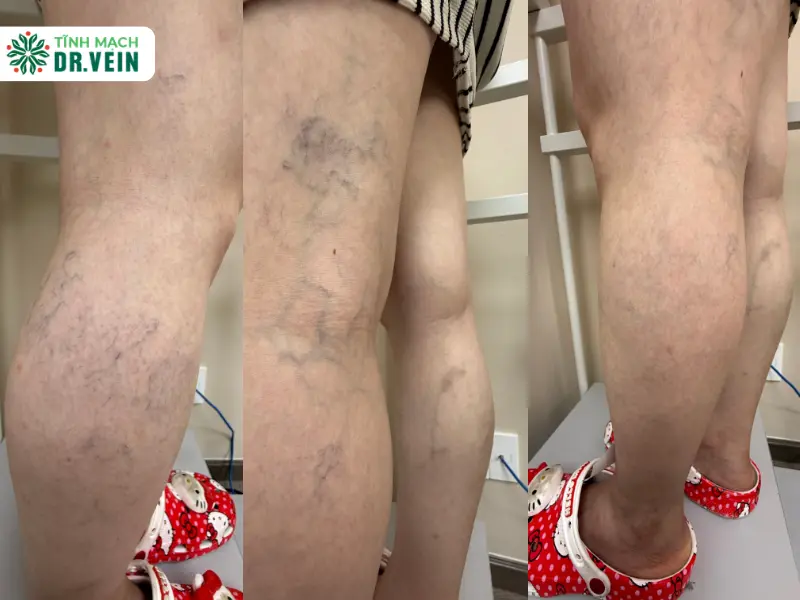
Medical Diagnosis: Based on the above indicators, Dr. Le Kim Cao concluded that the patient had lower extremity venous insufficiency at the C1 level / Bilateral great saphenous veins absent post-stripping. This is a typical manifestation of recurrent varicose veins, where the pathological flow shifts to attack collateral branches.
New Treatment Regimen: Thoroughly Resolving Remaining Lesions
Understanding the root causes of recurrent varicose veins, Dr. Le Kim Cao designed a new treatment regimen, applying modern technology and ensuring the least invasive criteria for the patient:
- UGFS (Ultrasound-Guided Foam Sclerotherapy) for the right leg: Under ultrasound guidance, the doctor injects a foam sclerosant directly into the lumen of the damaged blood vessel to completely seal off the reflux flow from within the endothelium.
- Sclerotherapy: Due to the scattered and widespread appearance of green veins, after the main intervention, Ms. D.T.A.T. will return to the clinic for surface sclerotherapy on the remaining areas.
Instead of going through another painful dissection surgery, this treatment plan focuses on safety, high precision, and minimal intervention, helping the patient completely eliminate any psychological pressure.
Care Instructions
To maintain long-term recovery results, protect firm vessel walls, and prevent the risk of recurrent varicose veins in other locations, Dr. Le Kim Cao instructed the patient to strictly follow these home care habits:
- Maintain the habit of wearing medical compression stockings (Class 1 knee-high stockings) whenever forced to stand or sit for too long.
- Minimize poor postures that compress blood vessels, such as squatting or crossing legs.
- Increase appropriate physical activity and practice gentle physical therapy exercises to stimulate blood circulation.
- Well-control body weight combined with a scientific diet, supplementing with plenty of fiber and green vegetables.
- Strictly adhere to the follow-up appointment schedule after 1 month for the doctor to re-check the blood flow via ultrasound and complete the treatment regimen.
Ms. D.T.A.T.’s case is clear evidence: In-depth screening using vascular Doppler ultrasound plays a vital role in efforts to thoroughly treat the root of the disease. Any signs of recurrent varicose veins need to be detected early and intervened by highly experienced specialists. If you are experiencing similar symptoms or worrying about green veins reappearing after surgery, visit Dr. Vein immediately for a consultation on the safest recovery roadmap!
Contact Information
- Address: No. 2, My Toan 2 Residential Area, Tan Phong, District 7, Ho Chi Minh City
- Hotline: 0932.19.28.82
- Website: drvein.vn/en
- Business Hours: Monday – Saturday, 8:00 AM – 5:00 PM