A feeling of heaviness or fatigue in the legs, ankle swelling, night cramps, or twisted green veins are not just signs of ordinary tiredness. These can be symptoms of lower limb venous insufficiency (chronic venous insufficiency) – a condition where vein valves weaken, causing blood to pool in the legs and leading to dangerous complications if not treated promptly.
Treating lower limb venous insufficiency at the right time helps rapidly reduce symptoms, prevent skin ulcers, venous inflammation, Deep Vein Thrombosis (DVT), and limit long-term recurrence.
At Dr. Vein, patients are treated using minimally invasive, non-surgical methods with same-day recovery, personalized according to the severity of the condition.
When is treatment for lower limb venous insufficiency needed?
Not every case requires immediate intervention. However, patients should seek examination and consider treatment when experiencing:
- Heaviness and tightness in the calves, especially after standing or sitting for long periods.
- Night cramps, stinging, or burning sensations along the legs.
- Ankle edema (swelling), recurring swelling.
- Visible green veins or twisted varicose clusters causing discomfort or aesthetic issues.
- Skin discoloration, dryness, itching, or patches of dermatitis.
- Slow-healing ulcers around the ankle.
- Doppler ultrasound showing valvular insufficiency and venous reflux.

Doppler Ultrasound – The Gold Standard Before Treatment
Before treatment, the doctor will perform a 2D/3D lower limb venous Doppler ultrasound to:
- Determine the direction of reflux.
- Measure the diameter, length, and location of the insufficient vein.
- Assess the severity of valvular insufficiency.
- Detect venous thrombosis (blood clots).
- Identify related superficial, deep, and perforator veins.
Doppler is a mandatory step to establish an accurate treatment protocol, avoiding intervention at the wrong site or overtreatment.
View more: Vascular Doppler Ultrasound

Venous Insufficiency Treatment Methods at Dr. Vein
Depending on the severity, the location of the insufficient vein, and individual patient characteristics, the doctor will prescribe one or a combination of the following methods:
3.1. Endovenous Laser Ablation 1940nm (EVLA)
Mechanism: The 1940nm laser acts on the insufficient vein wall → causes spasm and seals the vessel → blood flow is redirected to healthy veins.
Advantages:
- Minimal pain due to new generation 1940nm technology.
- No scarring.
- Procedure time: 45–60 minutes.
- Walk almost normally after 2–4 hours.
- Recovery within 24 hours.
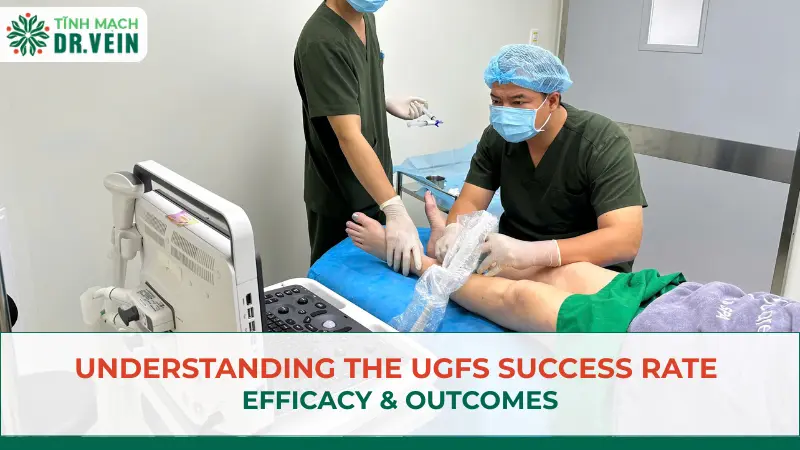
3.2. Ultrasound-Guided Foam Sclerotherapy (UGFS)
Mechanism: The doctor introduces a sclerosing agent (foam) into the vein under Doppler ultrasound guidance, causing fibrosis and collapsing the insufficient vein.
Advantages:
- High precision due to direct ultrasound monitoring.
- No scarring.
- Short procedure time.
- Suitable for vein segments difficult to treat with laser or recurrent veins.
3.3. Superficial Sclerotherapy
Applied for superficial veins, small spider veins causing blood stagnation, heaviness, or discomfort in the calf and ankle area.
Treatment Goals:
- Reduce stagnation in superficial venous circulation.
- Improve local discomfort symptoms.
- Support optimal results after main interventions (Laser, UGFS).
Medical Management – Support & Symptom Control
Alongside intervention, doctors may prescribe medical treatment and lifestyle adjustments to support and maintain results:
- Wear medical compression stockings: Helps improve venous return, reduce swelling and heavy leg sensation.
- Reasonable physical activity: Walking, swimming, cycling; avoid standing or sitting in one position for too long.
- Weight control: Reduces pressure on the lower limb venous system.
- Limit smoking and alcohol: Helps better protect vessel walls.
According to ESVS 2022 guidelines, proper lifestyle changes help reduce the risk of disease progression and recurrence.
Treatment Process at Dr. Vein
The treatment process at Dr. Vein is standardized and transparent, following these steps:
- Vascular Specialist Consultation: The doctor assesses symptoms, occupation, lifestyle habits, and medical history.
- 2D/3D Lower Limb Venous Doppler Ultrasound: Comprehensive evaluation of the superficial and deep venous systems.
- Result Explanation & Treatment Protocol Consultation: Selecting the appropriate method for each case (EVLA 1940nm, UGFS, Sclerotherapy, Biological Glue, Medical Management, etc.).
- Intervention Implementation: Minimally invasive procedure; patients can go home the same day.
- Monitoring & Periodic Follow-up: Ultrasound re-check of blood flow, symptom assessment, and adjustment if necessary.
Dr. Vein – Long-term Companion in Venous Insufficiency Treatment
- Patients are examined and treated by experienced vascular doctors.
- Modern 2D/3D Doppler ultrasound systems support accurate diagnosis.
- Personalized treatment protocols based on the severity of each patient’s condition.
- Application of minimally invasive intervention methods, minimizing open surgery.
- Post-treatment monitoring and periodic follow-ups help effectively control this chronic condition.

Reference
European Society for Vascular Surgery (ESVS). Guidelines on Chronic Venous Disease, 2022.
NICE Clinical Guideline CG168: Varicose Veins in the Legs, 2023.
Cleveland Clinic: Varicose Veins – Diagnosis & Treatment, 2024.
Dr. Vein Internal Clinical Protocol, 2025.