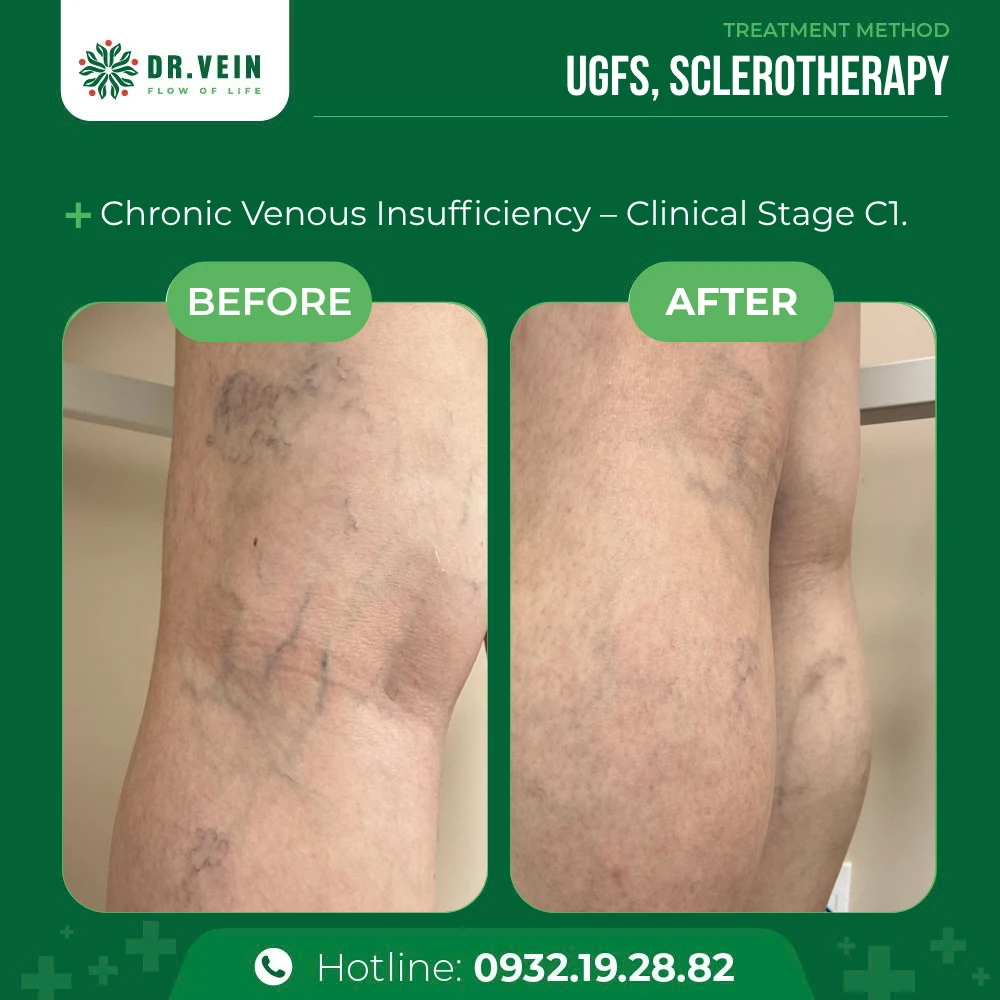
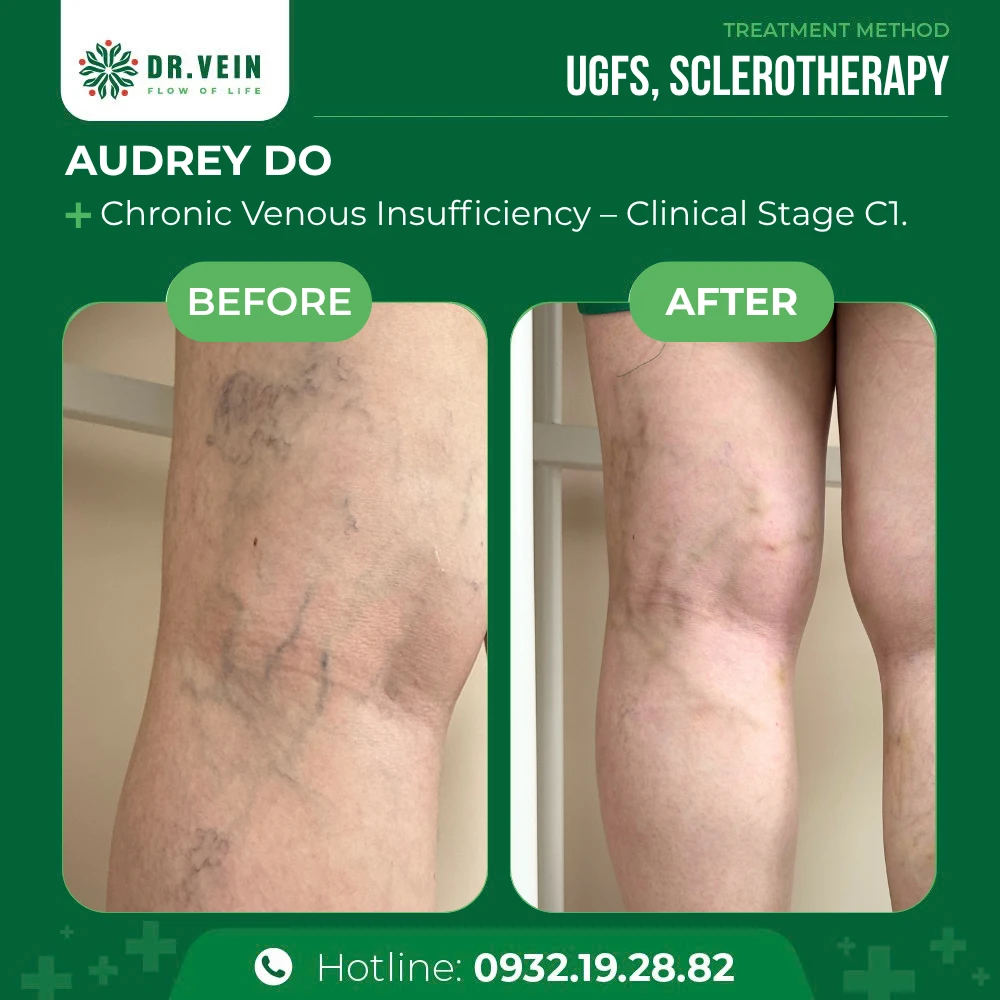
Ms. Audrey Do (39 years old) visited Dr. Vein Clinic seeking expert care for widespread superficial veins across both legs. Approximately 3 to 4 years earlier, she had undergone bilateral vein stripping surgery at another medical facility, believing it would permanently resolve her vascular troubles. Recently, however, recurrent spider veins after vein stripping began spreading noticeably across the posterior thighs, popliteal areas, and lower legs on both sides. Along with the visible cosmetic blemish, she experienced occasional leg cramps, raising concern that her vascular disease was progressing despite her previous invasive operation.
Clinical Assessment: Accessory Saphenous Reflux Following Previous Stripping
During the clinical consultation and detailed Doppler ultrasound examination, the specialist observed that both great saphenous trunks were completely absent, confirming prior surgical extraction. However, Doppler imaging revealed an incompetent accessory saphenous vein with pathological reflux lasting over 2 seconds, feeding directly into the lower right calf veins. The official diagnosis was confirmed as Chronic Venous Insufficiency – Clinical Stage C1 in a patient with prior bilateral saphenous stripping. This newly active accessory reflux channel was the root source sustaining the recurrent spider veins after vein stripping and the intermittent cramping sensations.
Targeted Treatment Strategy: Phased Non-Invasive Protocol
Because the main trunks were already removed and open surgical revision was undesirable, the specialists designed a conservative, outpatient protocol to seal the residual feeding branches:
- Ultrasound-Guided Foam Sclerotherapy (UGFS) on the Right Leg: Under real-time Doppler ultrasound guidance, sclerosant foam was delivered precisely into the refluxing accessory saphenous branch, closing off the high-pressure reflux pathway without surgical incisions or pain.
- Sclerotherapy: Utilizing specialized vein-illumination devices, liquid sclerosant was injected directly into the spider and reticular vein clusters on the posterior thighs, knees, and calves to shut down superficial blood pooling.
Key Advantages: This approach offered an effective alternative to repeated open surgery, requiring zero surgical trauma, no general anesthesia, and allowing Audrey to resume her routine immediately.
Results: Clear Skin Restored Without Surgical Trauma
Following her primary treatment session at Dr. Vein Clinic, Audrey experienced swift relief. The scattered recurrent spider veins after vein stripping began fading cleanly across both legs, and the sporadic calf cramps ceased entirely. Grateful to resolve her recurring vascular issues through a gentle procedure, she received comprehensive aftercare recommendations: wearing class 1 compression stockings during prolonged standing or sitting, avoiding squatting or crossing legs, maintaining a diet rich in fruits and vegetables, practicing daily ankle-pump exercises, and attending her 1-month follow-up evaluation for secondary refinement.