
Ultrasound-guided foam sclerotherapy (UGFS) is a minimally invasive treatment for varicose veins and venous insufficiency. The UGFS success rate varies depending on how treatment success is defined, the type and size of vein treated, the patient’s venous anatomy, and the length of follow-up.
Recent evidence shows that UGFS can provide meaningful symptom relief and long-term control of venous reflux, but its anatomical success may be lower than that of some endovenous thermal procedures when treating larger saphenous trunks. In a 2025 multicenter study, Mariani et al. reported that 85.5% of patients had no truncal reflux or only asymptomatic reflux at the end of follow-up, while the five-year disease-free time rate was 77.7%.
At the same time, a 2026 long-term randomized trial found that UGFS had higher rates of recurrent great saphenous vein reflux and re-intervention than endovenous laser ablation (EVLA) or high ligation and stripping over 14 years. These findings show why there is no single UGFS success rate that applies to every patient or every type of venous disease.
What Is Ultrasound-Guided Foam Sclerotherapy?
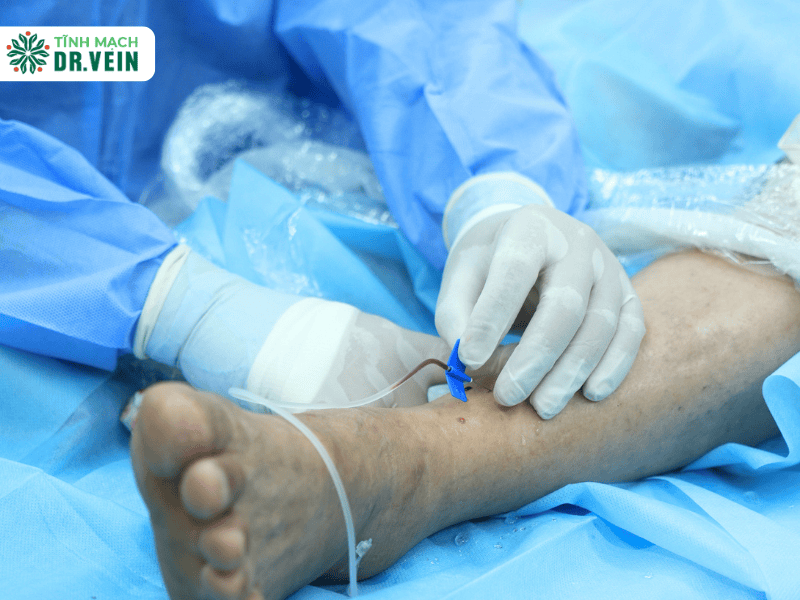
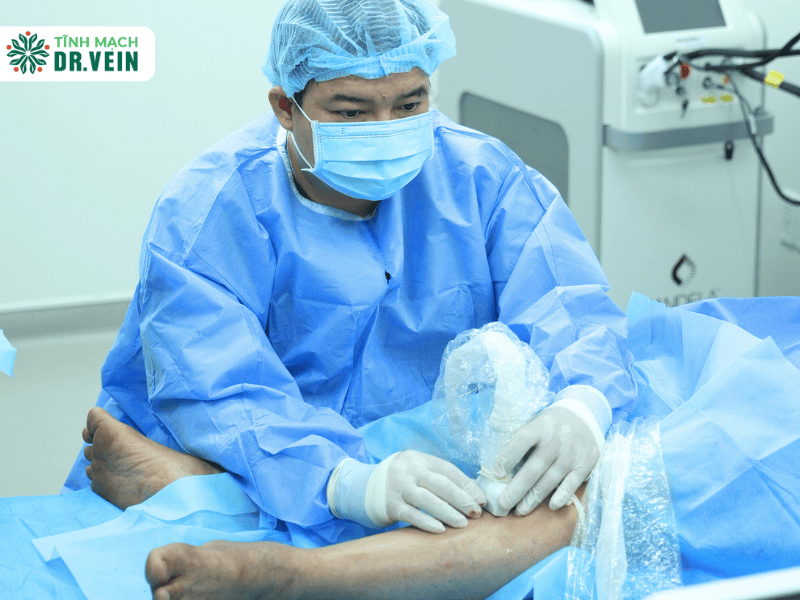
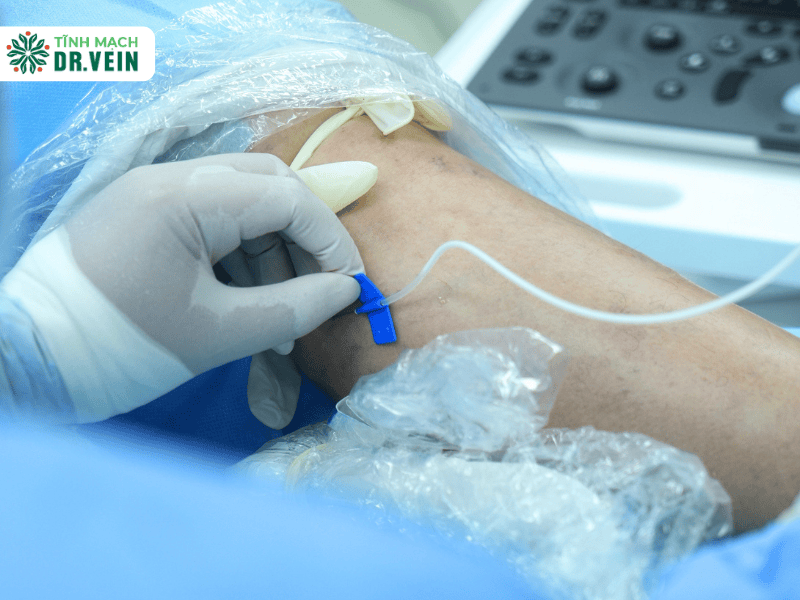
UGFS is a minimally invasive procedure used to treat incompetent superficial veins. During the procedure, a sclerosant is mixed with gas to create foam. The foam is then introduced into the target vein under ultrasound guidance. The foam comes into contact with the inner lining of the vein, causing a controlled reaction that leads to closure and eventual fibrosis of the treated vessel.
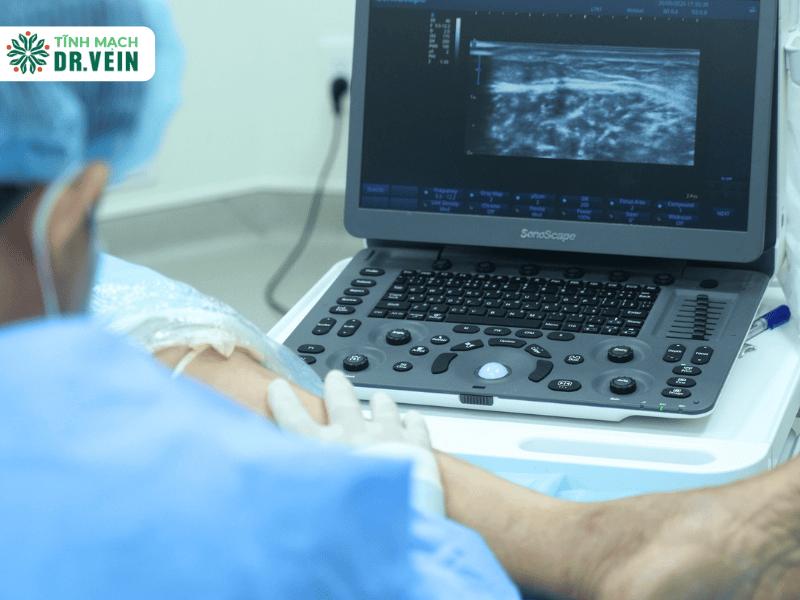
Ultrasound guidance allows the clinician to visualise the target vein throughout the procedure and monitor the distribution of the foam. This is particularly useful when treating veins that are not clearly visible or palpable from the skin surface.
The European Society for Vascular Surgery (ESVS) describes foam sclerotherapy as an established endovenous treatment and recommends ultrasound guidance when treating non-visible varicose veins.
Defining Medical Efficacy: What Constitutes a High UGFS Success Rate?
In the field of modern phlebology, success is not a vague concept; it is measured through strict clinical criteria. When vascular specialists discuss the UGFS success rate, they evaluate the outcome across three distinct parameters:
- Immediate Anatomical Closure: Does the diseased vein shut down completely during the initial procedure?
- Long-Term Occlusion: Does the vessel remain permanently closed and eventually absorb into the surrounding tissue over the following months and years?
- Symptomatic Resolution: Do the physical indicators of venous reflux—such as extreme leg heaviness, nocturnal cramping, and edema—completely resolve?
Current global vascular data indicates that the primary UGFS success rate is exceptionally high, frequently exceeding 85% to 90% for complete occlusion in a single session, with subsequent touch-up sessions bringing total symptomatic resolution close to 98%. However, this percentage is not a static number; it is heavily influenced by the precision of the diagnostic tools and the technical proficiency of the administering specialist.
The Mechanics of Efficacy: Why UGFS is Highly Successful
To understand why the UGFS success rate rivals and often surpasses traditional surgical methods, it is necessary to examine the physical properties of the medical foam.
Unlike older liquid sclerotherapy, which could become diluted by blood flow within a large vein, UGFS utilizes a proprietary microfoam. When injected, this foam physically displaces the stagnant blood, expanding to fill the entire diameter of the target vessel. This ensures maximum, uniform contact with the endothelial lining of the vein wall. The chemical reaction induces a controlled spasm, sealing the vein shut instantly.
Because the foam can navigate through complex, tortuous (twisted) venous networks, the UGFS success rate is particularly outstanding for patients presenting with intricate anatomical structures, such as a malfunctioning Giacomini vein or recurrent varicosities from previous failed surgeries.
Does Vein Size Affect the UGFS Success Rate?
Yes. The diameter of the treated vein is one of the factors that can influence the success rate. Larger veins can be more challenging to treat effectively because achieving adequate contact between the foam and the entire vein wall may be more difficult.
Mariani et al. (2025) found a marked difference in five-year reflux-free outcomes according to saphenous trunk diameter. Patients with veins measuring 8 mm or less had a 91.3% five-year reflux-free rate, compared with 46% for veins larger than 8 mm.
The researchers also identified larger saphenous trunk diameter as a significant prognostic factor for recurrence. This does not mean that UGFS cannot be used for larger veins. Instead, it highlights the importance of selecting appropriate patients and using an appropriate treatment technique.
Does the Type of Vein Affect UGFS Success?
Yes. UGFS can be used for different superficial venous structures, but outcomes may vary depending on the vein being treated. The GSV and SSV are major superficial venous trunks that can develop reflux and contribute to varicose veins.
In the 2025 multicenter study, Mariani et al. found similar five-year recurrence-free time rates for the GSV and SSV: 69.9% and 76.8%, respectively. The difference was not statistically significant. This suggests that UGFS can be effective for both GSV and SSV incompetence, although individual anatomy and vein diameter remain important considerations.
UGFS may also be used for tributary veins, recurrent varicose veins and selected superficial venous abnormalities.
UGFS Success Rate for Recurrent Varicose Veins
UGFS can be particularly useful in selected cases of recurrent varicose veins. Recurrent disease can be difficult to manage because previous surgery or ablation may have altered the normal venous anatomy. Re-exploration of previously treated areas can also be more technically challenging.
The ESVS guidelines state that ultrasound-guided foam sclerotherapy can be considered for symptomatic recurrent varicose veins caused by saphenous trunk incompetence, with or without phlebectomy in appropriate cases.
Mariani et al. (2025) also found that repeat UGFS could successfully treat symptomatic recurrence in a substantial proportion of patients. Among the 50 patients who underwent additional UGFS, 40 achieved treatment success, corresponding to an 80% success rate.
This illustrates an important point: repeat treatment is not necessarily a sign that the original procedure “failed.” Chronic venous disease can recur or develop in new venous segments, and additional treatment may sometimes be part of long-term disease management.
Does a Lower UGFS Success Rate Mean UGFS Is Ineffective?
No. A lower anatomical success rate compared with another treatment does not mean that UGFS is ineffective. Treatment selection involves more than vein closure alone. Factors such as invasiveness, recovery time, treatment cost, patient anatomy, symptoms and the possibility of repeat treatment also matter.
Mariani et al. (2025) reported significant improvements in both the revised Venous Clinical Severity Score and the Chronic Venous Disease Quality of Life Questionnaire after UGFS. This means that patients may experience meaningful clinical improvement even when long-term anatomical outcomes are not identical to those of thermal ablation.
The ESVS guidelines also recognise UGFS as an established treatment option in selected patients with superficial venous disease.
“I am directly involved in clinical assessment and follow-up, and tailor treatment plans to each stage of venous insufficiency—without overuse of invasive techniques, without pain, and without postoperative downtime.”
— MD, MSc., Specialist Level II Le Kim Cao, Dr. Vein
How Is UGFS Success Evaluated?
Doctors do not assess the success of UGFS based solely on whether a patient feels better.
A comprehensive follow-up may include:
- Clinical assessment of symptoms
- Examination of visible varicose veins
- Doppler Ultrasound
- Assessment of residual or recurrent reflux
- Evaluation of quality of life
- Review of complications
- Assessment of whether additional treatment is required
Doppler Ultrasound is particularly important because symptoms and anatomical findings do not always correspond perfectly. A patient may feel significantly better while some residual reflux remains asymptomatic.
This distinction is reflected in the 2025 multicenter study, where some patients had reflux detected on ultrasound but did not have clinically significant symptoms requiring additional treatment.
What Are the Possible Complications of UGFS?
UGFS is generally considered minimally invasive, but it is not completely risk-free.
Possible adverse effects include:
- Temporary pain or discomfort
- Bruising
- Skin hyperpigmentation
- Thrombophlebitis
- Headache
In the 2025 multicenter study by Mariani et al., immediate complications occurred in 3.7% of patients. Endovenous foam-induced thrombosis was detected in 2.8% one week after treatment, while cutaneous hyperpigmentation occurred in 10.7%.
The actual risk depends on the patient’s health, venous anatomy, treatment technique and other clinical factors. A specialist should assess individual risk before treatment.
What Should You Expect After UGFS?
The recovery process varies between individuals. Because UGFS is minimally invasive, patients can generally return to normal activities relatively quickly when there are no complications or specific restrictions.
Walking is commonly encouraged after treatment to support normal circulation, but the exact post-procedure instructions should be provided by the treating clinician based on the patient’s condition and treatment performed.
Follow-up may include doppler ultrasound to assess the treated vein and identify any residual or recurrent reflux.
Frequently Asked Questions (FAQs)
Is UGFS suitable for everyone with varicose veins?
No. Treatment should be selected after assessing the patient’s symptoms, venous anatomy and reflux pattern. UGFS is one of several treatment options for superficial venous disease.
How soon can international patients fly home after the procedure?
Due to the non-thermal nature of the treatment, the recovery is swift. Patients undergoing UGFS at Dr. Vein are typically cleared for air travel within 1 day, provided they wear the prescribed compression garments and adhere to in-flight mobility exercises.
View more: Complete Guide to Varicose Vein Treatment in Vietnam
Does a repeat UGFS treatment mean the first treatment failed?
Not necessarily. Chronic venous disease can recur or develop in another venous segment. Additional treatment can be part of long-term management.
Conclusion
Understanding the robust clinical data behind the UGFS success rate provides immense peace of mind for international patients seeking definitive solutions for venous insufficiency. By combining the unmatched diagnostic precision of the Color Doppler ultrasound with the adaptable efficacy of microfoam technology, modern phlebology offers a safe, permanent resolution to chronic circulatory issues.
For global travelers, selecting a hyper-specialized facility like Dr. Vein in Ho Chi Minh City ensures access to elite technical proficiency, comprehensive bilingual support, and a streamlined recovery protocol. This commitment to clinical excellence guarantees that the journey across borders results in optimal vascular health and a swift, seamless return to daily life.
References
ESVS – 2022 Chronic Venous Disease Guidelines
Mariani, F., Carbone, L., Sozio, G., Massaroni, R., Andreucci, E., Bianchi, V., & Bucalossi, M. (2025). Ultrasound-guided foam sclerotherapy of the saphenous trunks is associated with a low 5-year recurrence rate and improved quality of life in patients with chronic venous disease: A multicenter study. Journal of Vascular Surgery: Venous and Lymphatic Disorders, 13(4), 102212. https://doi.org/10.1016/j.jvsv.2025.102212
Contact Information
- Address: No. 2, My Toan 2 Residential Area, Tan Phong, District 7, Ho Chi Minh City
- Hotline: 0932.19.28.82
- Website: drvein.vn/en
- Business Hours: Monday – Saturday, 8:00 AM – 5:00 PM


